Fourteen-Month Timeline for Lumberjack Sets a Disruptive New Benchmark for Aerospace Assembly Lines
A quiet revolution in aerospace manufacturing just unfolded at Fort Hunter Liggett, California. In a mere thirty days, Northrop Grumman integrated SandboxAQ's quantum-enabled magnetic navigation sensors onto its Lumberjack uncrewed aircraft system, successfully proving that a drone can navigate a GPS-denied world by reading the Earth's magnetic fields.
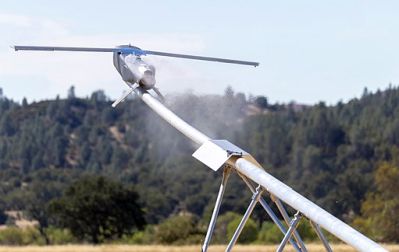
While the military implications of a jam-proof, one-way-attack drone are clear, the real story for the manufacturing sector lies in how this feat was achieved -- and what it signals for the future of industrial production.
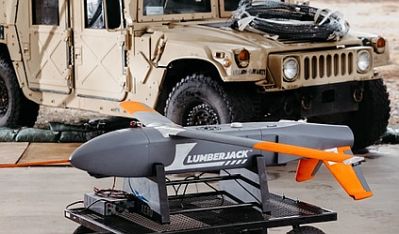
For decades, defense manufacturing has been notoriously slow, defined by multi-year development timelines and rigid, proprietary architectures. The Lumberjack platform completely upends this old model, having advanced from initial concept to its first flight in under 14 months.
Since then, it has logged a series of successful flights designed to layer and test new capabilities on top of the baseline platform. This rapid evolution showcases a new benchmark for manufacturing velocity, resulting in a multi-use loitering munition and launched effect capability that can adapt to changing tactical needs mid-production cycle.
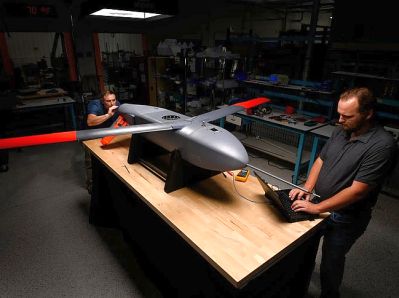
The mechanics behind the latest successful flight test illustrate a highly complex, multi-tiered manufacturing integration ecosystem. The demonstration blended a specialized air vehicle, an integrated mission kit, artificial intelligence technology, and SandboxAQ's magnetic navigation software-hardware solution. This level of cross-industry harmony requires a distinct division of labor on the assembly floor.
Northrop Grumman operates as the primary mission systems integrator and munitions provider, engineering the core tech that allows the drone to sense, detect, and deter threats. Meanwhile, the physical aircraft and its mechanical systems integration are supplied by ESAero Inc., a small-business manufacturer and wholly owned subsidiary of AV Inc.
This cooperative framework fundamentally changes the manufacturing supply chain.
B2B innovators like SandboxAQ, which leverages Large Quantitative Models (LQMs) at the intersection of AI and quantum techniques, are now direct stakeholders in hardware assembly. For legacy giants like Northrop Grumman -- which brings decades of autonomous experience and over 500,000 autonomous flight hours to the table -- the factory floor is transitioning into an open-architecture integration hub.
The manufacturing strategies refined on Lumberjack will ultimately set the production baseline for an entire spectrum of next-generation uncrewed solutions, including high-profile programs like MUX TACAIR and Project Talon. Ultimately, the future of aerospace manufacturing belongs to organizations that can successfully translate advanced, cross-industry physics into a rapid, repeatable assembly line.
Want more information? Click below.
Rate this article
View our terms of use and privacy policy ::m::